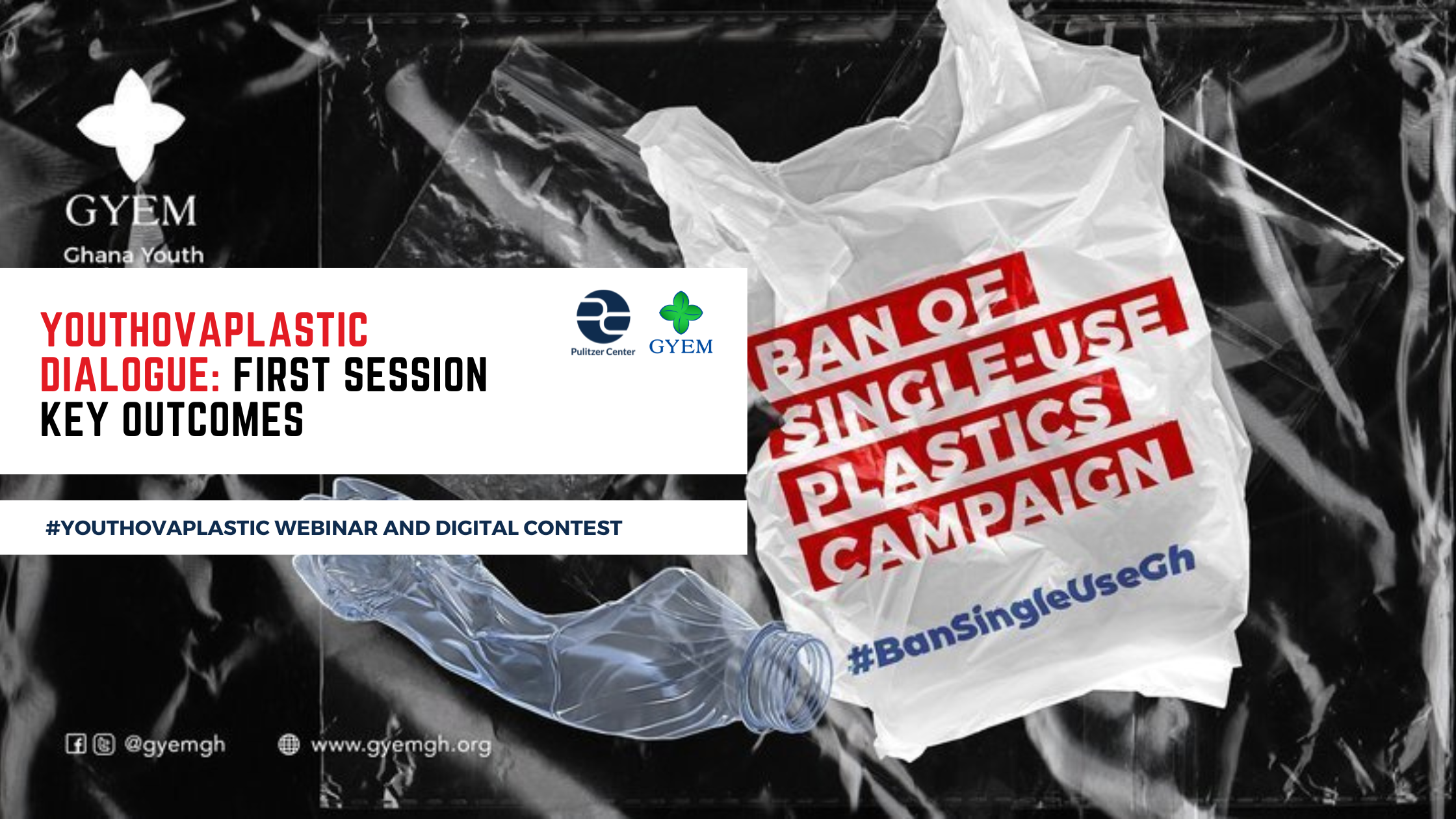
The Ghana Youth Environmental Movement (GYEM) hosted the first of a three-part webinar series on plastic pollution, bringing together youth activists, innovators, and Pan-African participants to discuss single-use plastics and sustainable alternatives. The session established that every single-use plastic has an existing alternative and emphasized youth-led behavioral change as the primary solution to Ghana’s plastic crisis.
Main Discussion Points
Scale of Plastic Pollution
- Global production: Over 400 million tons of plastics produced annually, with only 9% recycled and 11 million tons entering oceans yearly.
- Ghana’s position: Listed among top plastic waste destinations (alongside Malaysia, Vietnam, Indonesia) receiving waste from the U.S., EU, UK, and Japan.
- Treaty failure: At the latest UN Plastic Treaty talks in Geneva, 250 fossil and petrochemical lobbyists outnumbered all 27 EU member states combined; 175 nations agreed to a binding treaty in 2024, but it still does not exist.
Single-Use Plastics Defined
SUPs are disposable items designed for one-time use including bags, bottles, straws, and packaging that take hundreds of years to decompose, meaning today’s waste will persist for generations. Recent research found microplastics in a baby’s brain, demonstrating the health impact of plastic pollution.
Local Impact Examples
- Jamestown coastal area: Beaches accumulate plastic waste from across Accra via lagoon systems connecting other parts of the city to the sea.
- Osu Beach: Described as having piles of plastic bottles, food wrappers, and clothing waste washed ashore.
- University of Ghana campus: Experiences flooding due to plastic pollution blocking drainage systems.
Plastic-Textile Connection
Synthetic textiles and plastics share the same fundamental building blocks (polymers/monomers), making textile waste essentially plastic waste that resists degradation and persists in the environment.
Existing Alternatives Highlighted
Traditional Solutions
- Woven plant-based bags from Papua New Guinea.
- Banana leaf packaging used in all tropical region across Africa & Asia
- Bamboo cutlery
- Earthenware pottery
- Tote bags/reusable bags & bottles
Innovation Example: Seaweed Straws
One study found seaweed straws remove from the atmosphere the equivalent of 95% of what a standard plastic straw emits across its life cycle, making them potentially carbon neutral at scale.
Youth-Led Innovations Showcased
GYEM’s Ban on Single-Use Plastics Campaign
- Running since 2021, advocating for ban on selected single-use plastics.
- Stakeholder engagement with policymakers and Parliamentary Select Committee on Environment, including EPA, waste pickers and market women.
- Community awareness events at Kaneshie Market and Tema Station.
Plastic Punch Water ATM Machine
- Mobile water dispensing system allowing users to refill reusable bottles using RFID cards. Currently piloting for free at vantage points.
- Displays real-time water quality and environmental impact indicators including plastic bottles reduced.
- Works with any water source (borehole, Ghana Water Company, river, beach) with appropriate filtration.
- Solar power integration planned for rural deployment.
- Currently available at Kwame Nkrumah Memorial Park with expansion to other vantage points planned.
Other Initiatives
- Eco-bricks construction: Youth groups converting plastic waste into building materials rather than recycling into lower-quality plastics.
- Climate Sociologist’s Ahaban Campaign: Street mobilization rejecting single-use packaging in favor of traditional leaf wrapping (ahaba), using social media, electric bikes, and JAMA to make sustainability culturally appealing.
Policy Gaps Identified
Critical Enforcement Failures
- Weak enforcement of existing policies despite adequate policy framework.
- Lack of stakeholder alignment across government, academia, and industry.
- No dedicated funding for recycling and innovation despite existing sanitation and pollution taxes.
Infrastructure Bottlenecks
- Less than half of plastic waste is collected, and only 9-10% is recycled.
- Recycled plastics suffer quality degradation.
- National Plastics Management Policy exists but shows minimal implementation impact.
- Extended Producer Responsibility discussions ongoing but progressing slowly.
Sociological Perspectives Shared
Marxist Theory Application
Plastic waste viewed as evidence of capitalism’s drive for profit where production outpaces ecological limits and costs are externalized onto vulnerable Global South communities.
World Systems Theory
Ghana and West African countries absorb environmental consequences of core nations’ (U.S., EU, UK, Japan) consumption patterns, functioning as the “dump site” while core nations maintain clean environments.
Structural Solutions Proposed
- Top-down policy: Leaders should refuse the importation and production of single-use plastics (SUPs), fast fashion, and microplastics-agents regardless of diplomatic relations.
- Economic deterrents: Heavy taxes/duties on SUPs to restore Ghana’s traditional culture of reuse where people washed and reused plastics.
- European/Southern African model: Charging for plastic bags forces behavioral change toward reusable alternatives.
Behavioral Change Strategies
Individual Actions Recommended
- Start small: Carry tote bags to avoid large plastic bags at food vendors.
- Use reusable water bottles consistently.
- Volunteer with climate/environment organizations working on plastic issues.
- Confront littering: Even when perpetrators are older, especially those dropping pure water sachets.
Community Mobilization Approaches
- Interactive theater method: Create problems on stage but allow community audiences to propose solutions rather than imposing top-down answers.
- Engage food vendors about selling reusable alternatives to make convenience accessible to buyers.
- Document lifestyle changes on social media showing market visits with reusable bags and plates.
Social Media Campaigns
- Peer-to-peer influence shifts norms making plastic reduction a collective expectation rather than individual choice.
- Creative content: Videos, challenges, and infographics make sustainability culturally appealing.
- Stanley Cup trend: Example of how influencer-driven trends can make reusable bottles fashionable.
Digital Contest Announced
Supported by the Pulitzer Center, GYEM is hosting a digital contest to promote measurable behavioral change in single-use plastic management.
Contest Categories
- Waste segregation: Demonstrating separation of single-use plastics.
- Saying no to plastics: Real-life scenarios refusing SUPs and using reusable alternatives.
- Making a Knot challenge: Consciously reducing the size of pure water sachet plastics neatly and educating others of these benefits.
- Resisting SUPs: Refusing plastic food pack from sellers and buying from sellers with ecofriendly alternative like Ahaban.
Submission Requirements
- Format: Video, maximum 1 minute
- Quality: Clear audio and visuals
- Judging: Public voting on GYEM YouTube channel based on engagement metrics (likes)
- Eligibility: Open to individuals and groups; GYEM team members excluded
Participant Engagement
Pan-African Representation
- Participants from Senegal, Namibia, Nigeria joined Ghanaian attendees
- Emily Millerchip (PhD candidate, University of Sussex, UK) observed plastic pollution is more visible in Accra streets than UK where drainage systems hide the issue
- Nunana from Ghana’s Environmental Protection Authority participated
GYEM Team Present
- Glory: National Coordinator
- Kraba: Finance Lead
- Docas: Programs Officer
- Blaise: Head of Communications (presenter)
- Samuel Duah: Campaign Lead (facilitator)
- Multiple steering group members attended
Next Steps
- Session 2: Scheduled for Saturday, March 28th
- Contest submissions: Everyone is welcome to participate
- Social media follow-up: Full contest details and webinar information are being shared on GYEM’s X, LinkedIn, and Instagram channels
- Behavioral challenge: All participants are encouraged to start implementing small changes and documenting them
Key Message to Youth
“In this world, you are one of two things: you’re either a problem or a solution. If you look around and you are not a solution, you are definitely a problem.” Young people must start small, join organizations tackling plastic pollution, and become examples others can emulate through lifestyle changes.