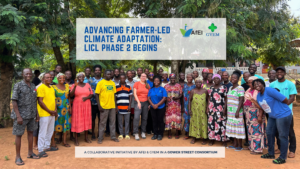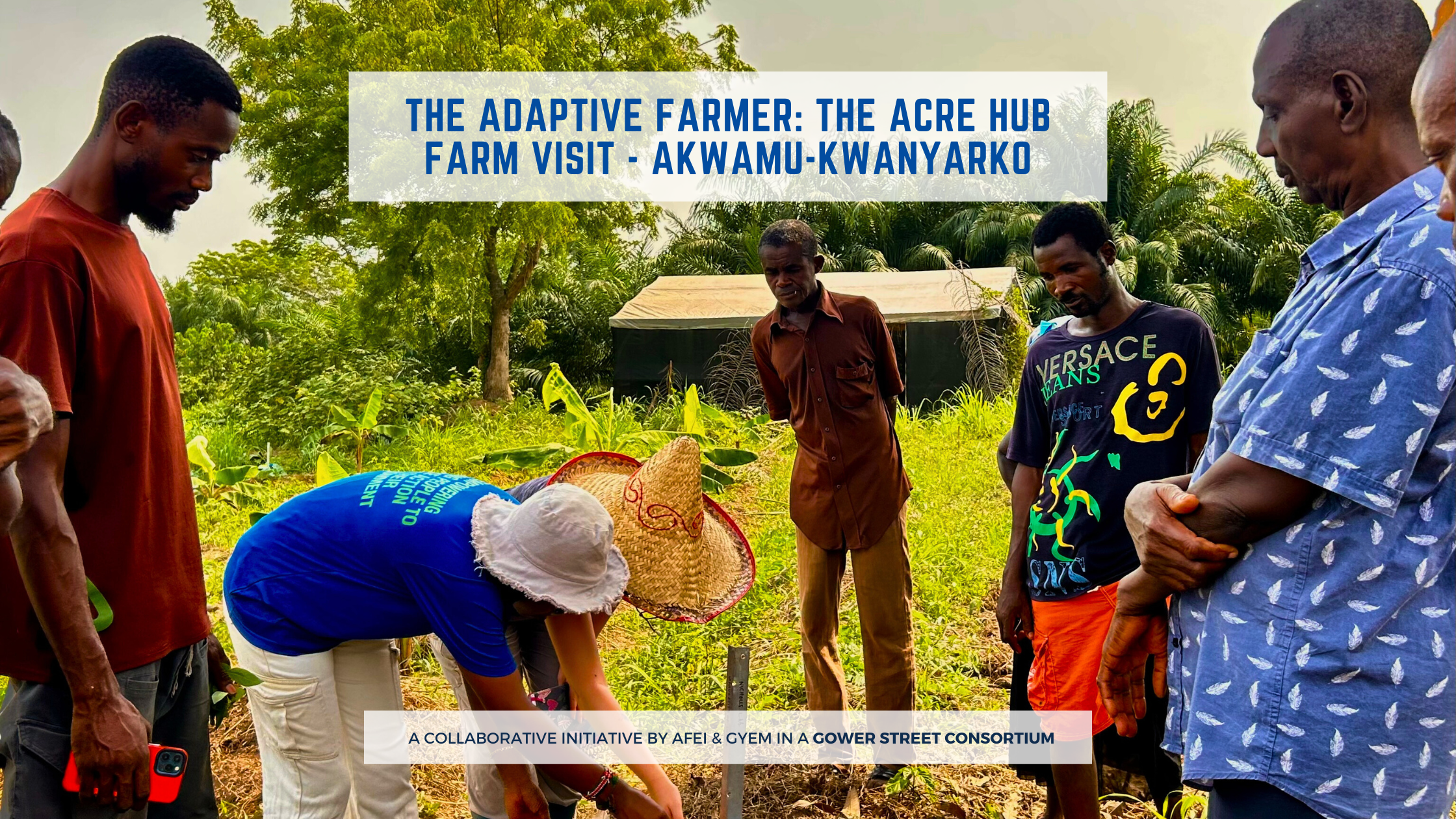
As part of the official rollout for Phase 2 of the Life in a Changing Landscape (LICL) project, the Ghana Youth Environmental Movement (GYEM) recently conducted a field-based learning visit at the ACRE Hub in Akwamu-Kwanyarko. This visit served as a practical platform for “Adaptive Farmers” to exchange knowledge and witness the integration of scientific research into traditional farming systems.
Site Observations and the “Green Bowl” Study
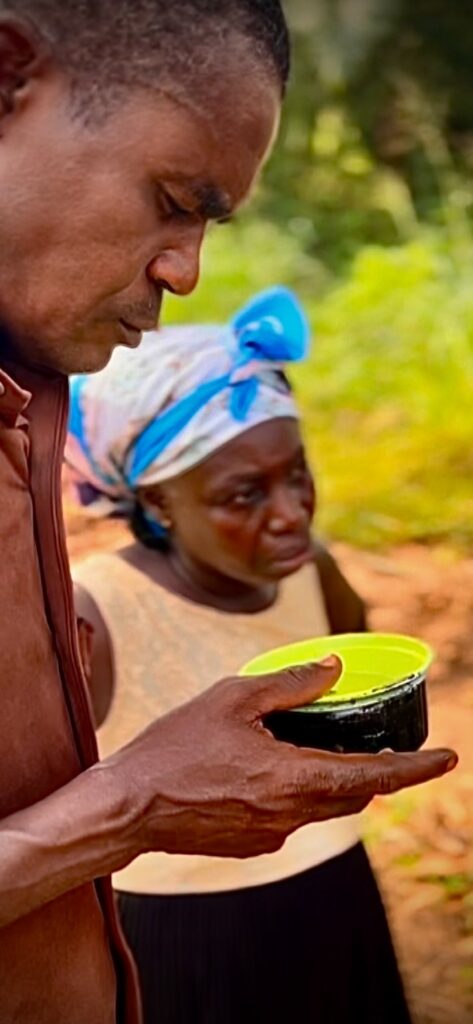
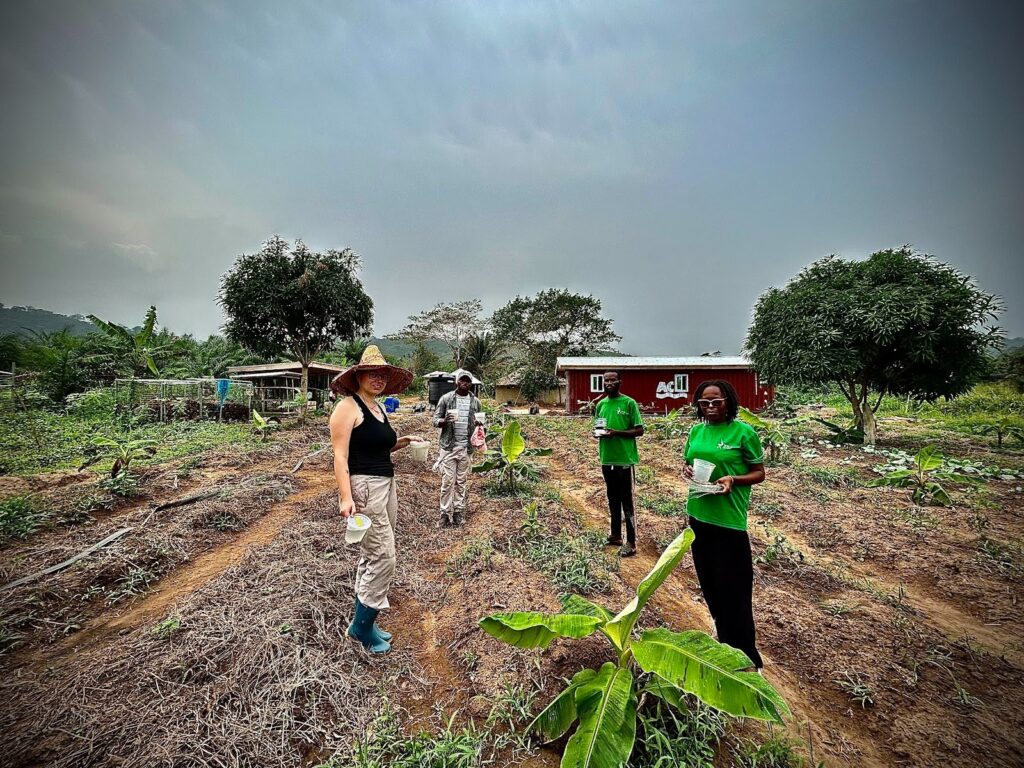
A central part of the day involved on-site observations led by the GYEM and WildRain team, including Emily Millerchip, a PhD researcher from the University of Sussex currently interning with WildRain. Farmers participated in a hands-on examination of local biodiversity to collect and study insects found within the agroforestry plot.
The discussion focused on identifying beneficial insects, primarily social wasps and native bees, that act as natural enemies of pests and as essential pollinators for crops such as mangoes and peppers. By documenting these species, the project aims to demonstrate how maintaining a balanced ecosystem can reduce the need for unsustainable chemical pesticides.
Advancing Peer-to-Peer Learning
The visit highlighted the “Training-of-Trainers” (ToT) model, where farmer group leaders engage directly with researchers to co-create Climate and Nature-Smart Agriculture (CNSA) solutions.
Key activities during the session included:
- Demonstration Site Review: Farmers inspected the progress of the organic composting facility at the ACRE Hub and the types of trees being grown.
- Knowledge Exchange: Adaptive Farmers shared their lived experiences with shifting weather patterns and soil degradation, providing qualitative data for the ongoing project.
- Research Integration: Emily’s work on entomology was presented not as a separate study, but as a practical tool for farmers to improve their ecological resilience and crop yields.
Looking Ahead: Scaling Impact
This field visit is a core component of LICL Phase 2, which aims to transition from pilot-phase dialogue into district-wide action. GYEM and the Alliance for Environmental Intervention (AfEI) are working to scale these interventions to serve 1,200 farmers across the Asuogyaman District over the next two years.
With a target of ensuring 60% of participants are women and youth, GYEM continues to prioritize restoration and empowerment as viable, long-term livelihoods for the community of Akwamu-Kwanyarko.
Stay connected with us for more updates on this project.