Plastic has become one of the most convenient materials of our time. It is cheap, lightweight, and everywhere. From the water we drink to the food we buy on the street, plastic has quietly embedded itself into our daily lives. For many of us, it has become almost impossible to imagine a day without it.
But convenience has come at a cost.
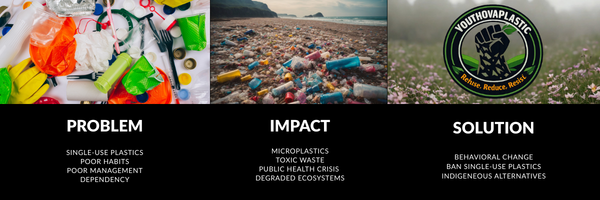
Across our cities, communities, beaches, and waterways, plastic waste is piling up faster than we can manage it. Drains are clogged, ecosystems are under pressure, and communities are increasingly forced to live with the consequences of a material designed to last far longer than its moment of use.
For years, conversations about banning single-use plastics have been filled with hesitation. The common response is familiar: “We are not ready yet.”
We ask whether alternatives exist, whether industries will survive, or whether people will adjust.
But perhaps the more honest question is this: Will we ever truly feel ready?
History shows that transformative changes rarely happen when societies feel perfectly prepared. They happen when people decide that continuing as we are is no longer acceptable. The shift comes not from perfect readiness, but from the moment we stop hesitating.
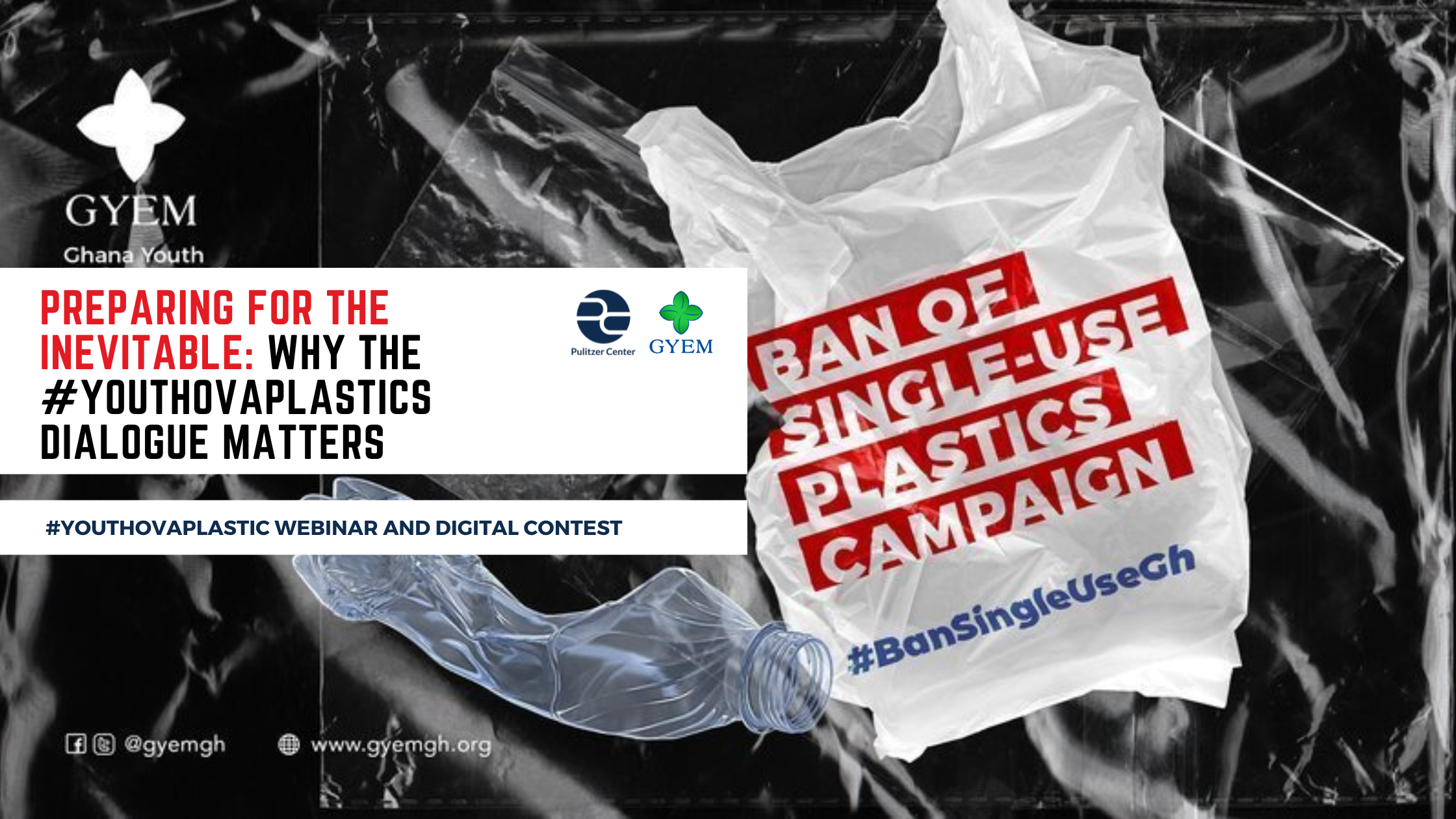
This is the spirit behind the #YouthOvaPlastics Dialogue and Digital Contest, an initiative under the Ghana Youth Environmental Movement’s campaign to ban single-use plastics in Ghana.
The upcoming webinar series is designed to go beyond slogans and surface-level advocacy. Instead, it invites participants into a deeper exploration of the realities behind plastic dependency.
Participants will examine:
- The historical rise of plastic and its global expansion.
- Why many countries in the Global South remain dependent on single-use plastics.
- The economic, political, and colonial dynamics that shape these dependencies.
- Indigenous alternatives that existed long before plastic became dominant.
- The role of young people in shaping behavioural change and public policy.
At the same time, the digital contest will provide a space for creativity, storytelling, and public engagement. Participants will be encouraged to share ideas, insights, and behavioural solutions that challenge the assumption that plastic dependency is inevitable.
Because perhaps the most important mindset shift we must make is this:
Plastic is not waste. It is an overflowing resource that has been mismanaged.
The problem is not simply that plastic exists. The problem is that a material designed for durability is being used for products meant to last only minutes before being discarded.
This contradiction is what is choking our environments today.
Preparing for a ban on single-use plastics will not happen overnight. It will require shifts in behaviour, innovation in business models, and courage in policy-making. It will require industries to rethink distribution systems, communities to rediscover indigenous practices, and consumers to reconsider everyday habits.
But every transition begins with a conversation.
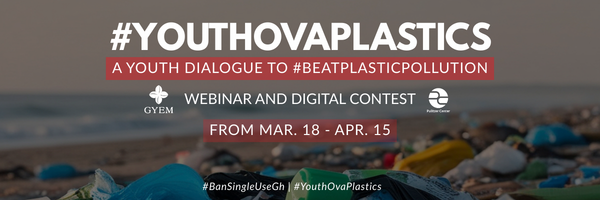
The #YouthOvaPlastics Dialogue is an invitation to be part of that conversation, to question, to learn, and to imagine what a different future could look like.
A future where convenience does not come at the cost of our ecosystems.
A future where we recognize that the power to change this trajectory does not lie only with governments or corporations, but also with ordinary people willing to rethink what we consume and how we live.
The ban on single-use plastics may not happen instantly.
But the shift toward that future begins the moment we decide to stop hesitating.
And that moment can start now.