
Phase 2 of the Life in a Changing Landscape (LICL) Project has officially commenced, marking a critical step in deepening farmer-led climate adaptation and evidence-based learning within participating communities.
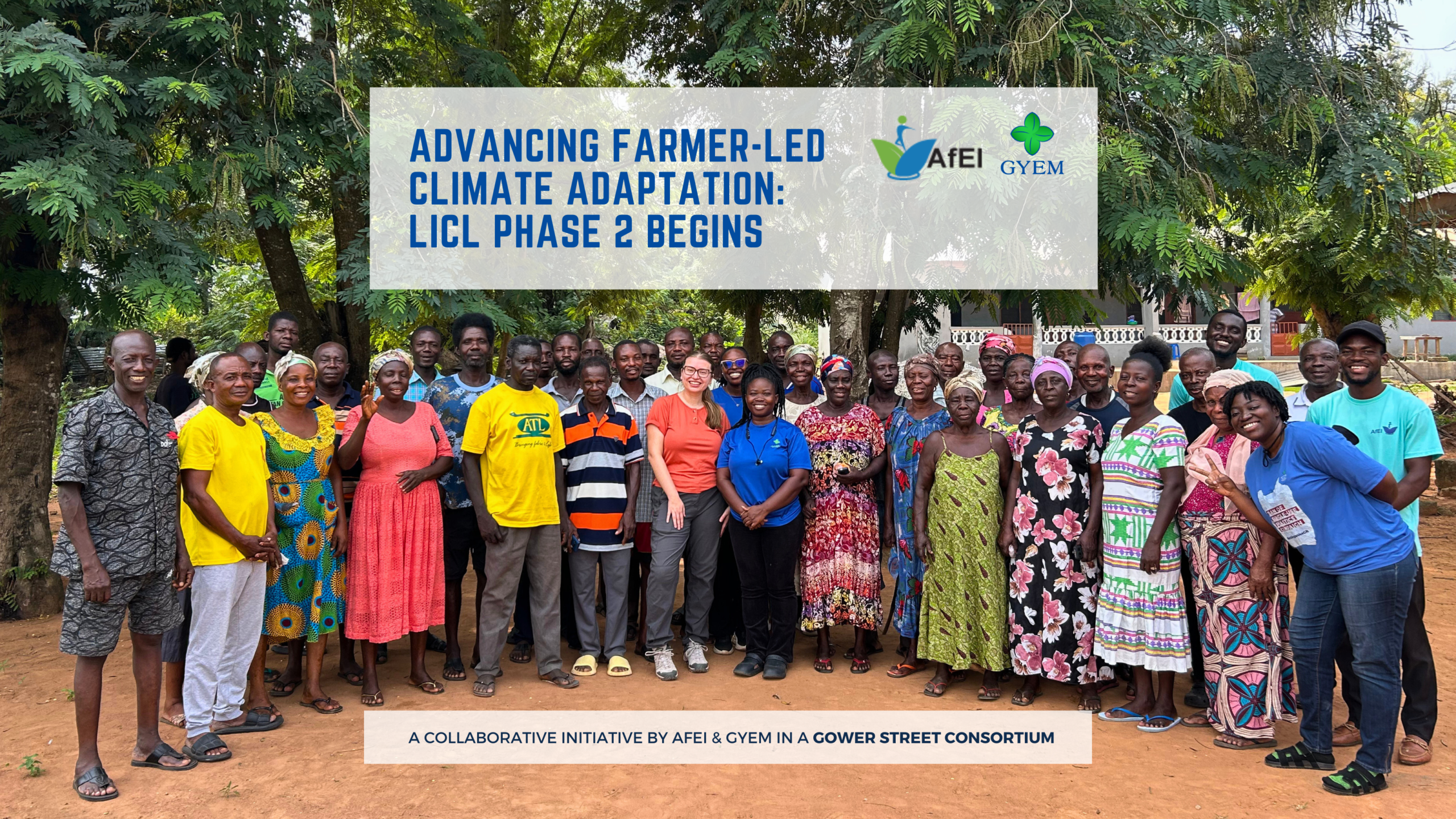
The phase opened with a community engagement in Akwamu-Kwanyarko, Asuogyaman District, Eastern Region, bringing together the project team, Adaptive Farmers, and partners to align expectations and priorities. As part of strengthening research-practice linkages, we introduced Emily Millerchip, a PhD research intern with WildRain and the Ghana Youth Environmental Movement (GYEM).
Emily’s research focuses on the benefits of insects in agriculture, a key component of climate-smart and ecologically resilient food systems. Farmers were engaged early in the research process, ensuring their knowledge and participation directly inform data collection and outcomes.
Together with Alliance for Environmental Intervention (AfEI), GYEM reflected on key outcomes from LICL Phase 1 and outlined the strategic direction for Phase 2, which places a strong emphasis on hands-on learning, peer exchange, and practical application. This phase is intentionally designed to move beyond dialogue into action, equipping farmers with tested, context-specific adaptation practices they can apply immediately.
Farmers played an active role in shaping Phase 2 by sharing current climate impacts on their farms, evolving seasonal patterns, and the adaptive strategies they are already using. These insights are central to ensuring the project remains responsive, locally grounded, and impact-oriented, while strengthening the relevance of both research and training activities.
As part of the practical learning framework, Adaptive Farmers will participate in exchange and demonstration visits to GYEM’s ACRE Hub and the AfEI Eco Village. These visits will support experiential learning, knowledge transfer, and peer-to-peer mentorship, key pillars for scaling climate-resilient agricultural practices beyond individual farms.
Phase 2 of LICL reinforces our shared commitment to farmer-centered solutions, practical impact, and long-term resilience. We look forward to sharing practical experiences, results, lessons learned, and emerging outcomes as implementation progresses.
Stay connected with us for more updates on this project.