As part of the Life in a Changing Landscape (LICL) Phase 2 rollout, the Ghana Youth Environmental Movement (GYEM) recently conducted a two-day educational and practical engagement series focused on climate-resilient farming and biodiversity. These sessions, held in the Asuogyaman District, were designed to bridge the gap between classroom theory and field-based application for the next generation of agricultural leaders.
Day 1: Classroom Engagement at Nnudu Aboasa Da JHS
On February 5, 2026, the GYEM team, accompanied by PhD researcher intern Emily Millerchip, visited Nnudu Aboasa Da JHS to facilitate a session on “Insects and Farming.” The objective was to educate students on the critical ecological services provided by insects in local food systems.
The session covered several key areas:
- The Science of Insects: Students learned to identify insects by their anatomical characteristics, six legs, antennae, and a three-part body (head, thorax, and abdomen).
- Pollination and Productivity: The discussion emphasized the role of honeybees and bumblebees in pollination, explaining how these insects are essential for the growth of fruits, vegetables, and seeds.
- Environmental Protection: Students explored ways to protect beneficial insects by preserving natural habitats and reducing the use of chemical pesticides, which can disrupt the balanced ecosystems required for healthy farms.
Day 2: Practical Field Session at the ACRE Hub
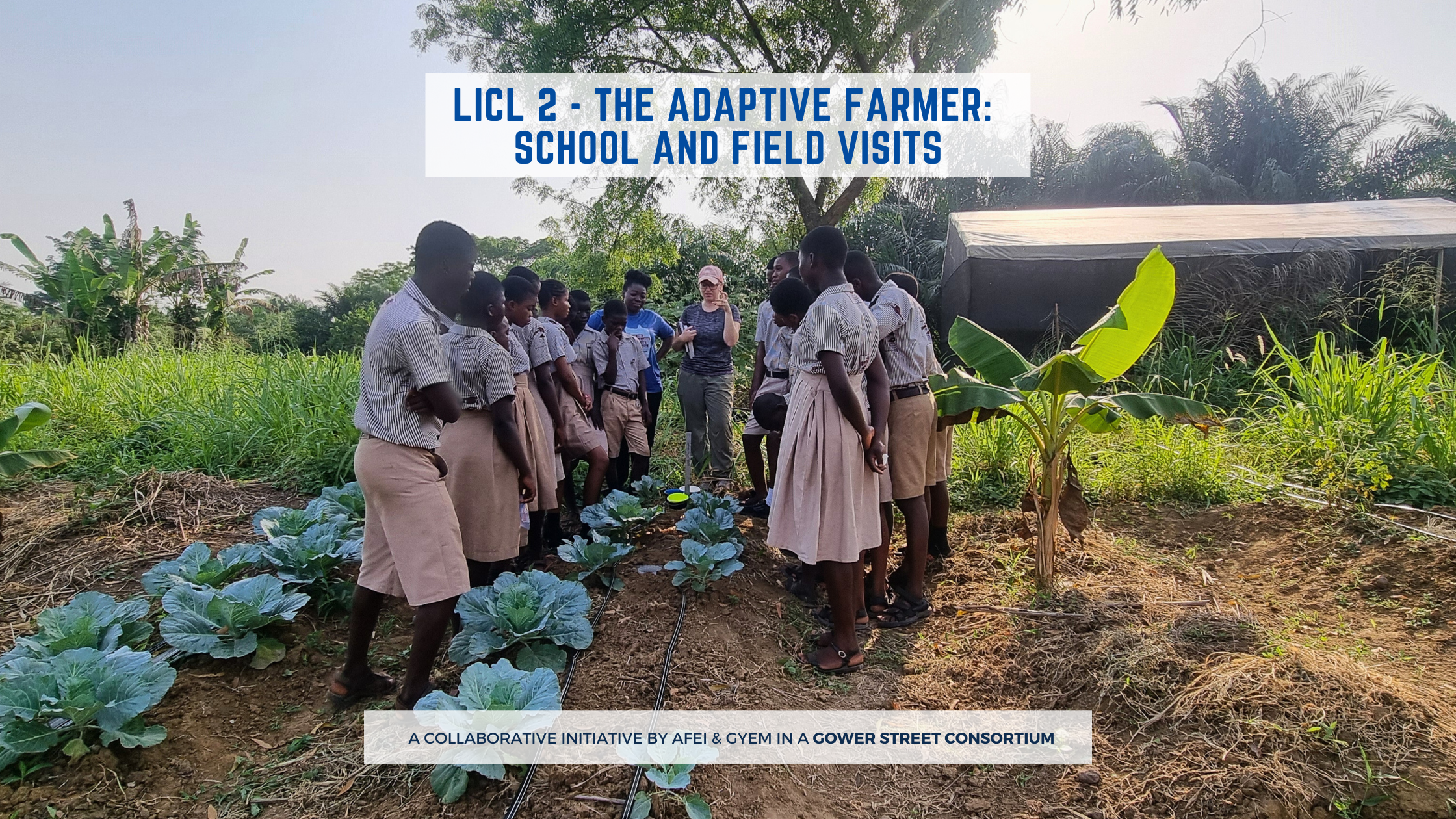
On February 6, 2026, the theory was put into practice at the ACRE Agroforestry Demonstration Farm. Students participated in a rotational learning circuit across three specialized stations, ensuring a comprehensive understanding of Climate and Nature-Smart Agriculture (CNSA).
- Agroforestry Station: This station introduced students to the interactions between trees, crops, and soil organisms. The focus was on how integrated farming systems improve soil health and farm productivity.
- Insect Monitoring Station: This station utilized field traps and sampling methods (including the “green bowl” technique) to observe local biodiversity. Students learned how scientists monitor insect populations as indicators of environmental health.
- Mushroom Cultivation Station: This station demonstrated mushroom production as a space-efficient and sustainable food source, highlighting its potential for economic empowerment.
The program concluded with a reflection session, allowing students to share observations and discuss the practical applications of agroforestry and biodiversity monitoring in their own communities.
Stay connected with us for more updates on this project.